TL;DR
A software request for proposal is a scored buying document, not a feature catalog. The buyers who get usable responses write nine things in a fixed order: the business problem, in-scope and out-of-scope workflows, mandatory versus scored requirements, published evaluation weights, security evidence, implementation proof, five-year total cost of ownership, submission rules, and named decision owners. This page is the procedural companion to the RFP and proposal software explainer. It does not rank vendors.
How to write a software RFP
Open with the operating constraint, not a feature wishlist. A useful first paragraph names the process that is failing, the metric that will move if the purchase works, and the date by which a decision must land. "We need a modern proposal platform" produces vendor marketing. "Our bid team answers 80 RFPs a year across legal, security, and product, and average cycle time is 14 days" produces comparable offers.
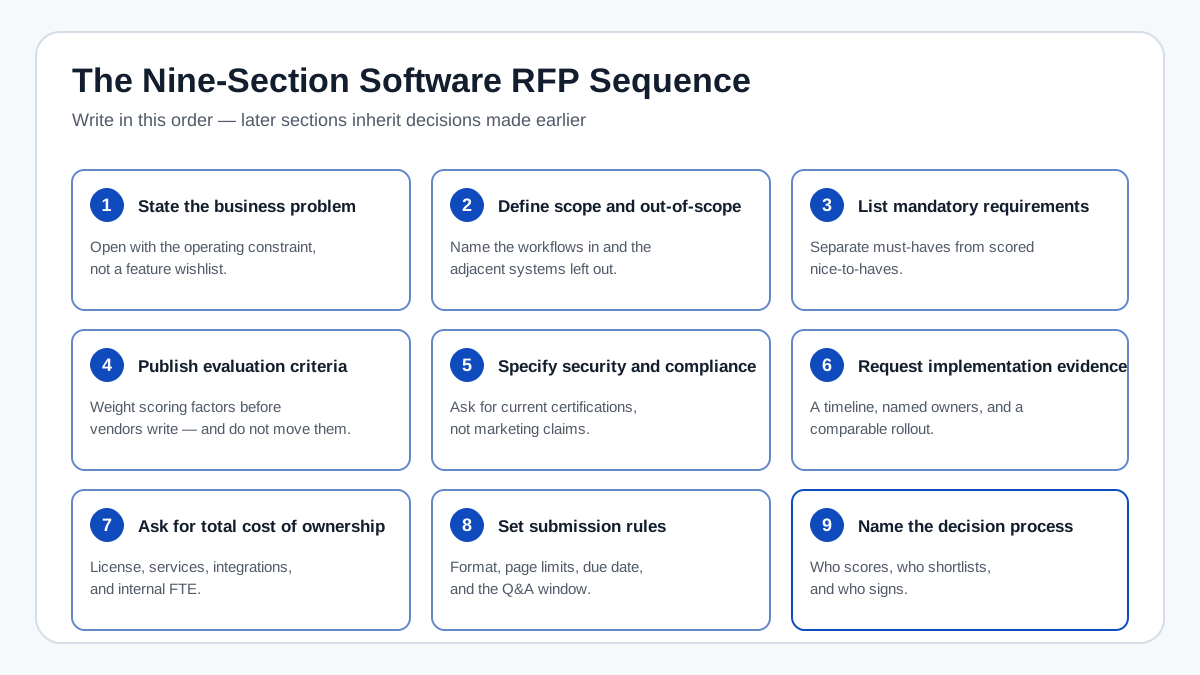
Then walk the nine-section software RFP sequence below. Each section is a writing job with a pass/fail test. Skip one and vendors fill the gap with claims you cannot score.
1. State the business problem
Name the constraint in one paragraph. Include volume (how many RFPs, quotes, or renewals per quarter), the teams that touch the document, and the metric that will decide success: cycle time, win rate, first-pass compliance, or cost per proposal. If two metrics matter, rank them. Vendors write to the first number they see.
2. Define scope and out-of-scope
Name the workflows in and the adjacent systems left out. In-scope might be RFP intake, answer-library governance, multi-reviewer assembly, and CRM opportunity sync. Out-of-scope might be e-signature, CPQ, or contract lifecycle management if those already live in another system. Adjacent tools will still appear in demos; an explicit out-of-scope list is what keeps them out of the scored response.
3. List mandatory requirements
Separate must-haves from scored nice-to-haves. Mandatory items are binary: SSO, data-residency options, a governed content library, or a named CRM connector. Everything else is weighted. Mixing the two turns a scored RFP into a checklist vendors can game by marking "roadmap" as yes.
4. Publish evaluation criteria
Weight scoring factors before vendors write. A workable split for software RFPs is requirements fit, implementation evidence, security posture, total cost, and references. Publish the percentages. If technical approach is 40 percent and price is 20 percent, vendors spend writing time where you will actually score. Hidden weights produce look-alike responses.
5. Specify security and compliance
Ask for current certifications, not marketing claims. Request the date of the last SOC 2 Type II report, whether a GDPR data-processing agreement is available, which identity providers the SSO path supports, and whether encryption covers data in transit and at rest. For regulated buyers, add the specific attestation the contract will need (HIPAA BAA, FedRAMP status, or an equivalent). A screenshot of a trust page is not evidence.
6. Request implementation evidence
Ask for a timeline, owners, and a comparable rollout. The useful artifacts are: a 30/60/90-day plan, who on the vendor side owns content-library migration, how many of your people the vendor expects in the first 90 days, and one named customer of similar seat count and CRM. Implementations fail on content migration and integration work, not on license activation.
7. Ask for total cost of ownership
License is the visible line. Require a five-year view that includes implementation services, connector work, internal FTE for library hygiene, and the cost of a major template overhaul. Seat-based quotes hide those lines. If the vendor will not itemize them, score the gap rather than inventing a number.
8. Set submission rules
Format, page limits, due date, and Q&A window belong in the RFP, not in a follow-up email. Specify file types, whether a portal or email is the delivery path, and the last date questions will be answered with the answer shared to every bidder. Ambiguous submission rules are how late or non-comparable packets enter the scoring room.
9. Name the decision process
Who scores, who shortlists, and who signs. List the evaluation committee by role (procurement, security, the bid-operations owner, IT). State whether a product demo is required before award, and whether a protest or clarification window exists after the shortlist. Vendors write cleaner responses when they know who will read each section.
What to include in a software RFP
Use the list below as a completeness check before the document leaves procurement. Each item maps to one of the nine sections above; a missing item is a scoring hole, not a style issue.
- Business problem and success metric
- In-scope and out-of-scope workflows
- Mandatory versus scored requirements
- Published evaluation weights
- Security and compliance evidence
- Implementation timeline and owners
- Five-year total cost of ownership
- Submission format and deadline
- Decision owners and protest path
Two attachments are worth adding rather than burying in prose: a requirements matrix vendors fill in (mandatory / supported / roadmap, with a comment column) and a TCO worksheet with the cost lines you will score. Both keep responses in a grid you can compare without re-reading narrative.
How software RFP evaluation actually works
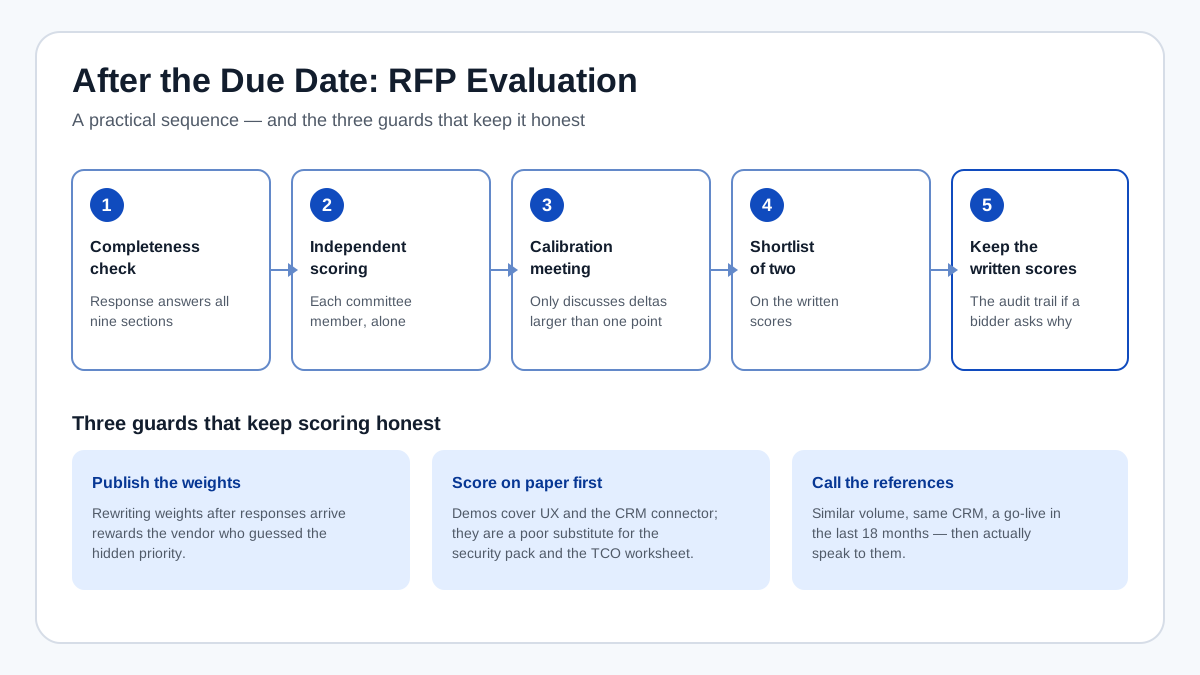
Scoring fails in the same three places on most software buys. First, the committee rewrites the weights after responses arrive, which rewards the vendor who guessed the hidden priority. Publish the weights in the RFP and do not move them. Second, demos replace the written response. A live walkthrough is useful for UX and for the CRM connector; it is a poor substitute for the security pack and the TCO worksheet. Score those on paper first. Third, references are collected but not called. Ask for a customer at similar volume, with the same CRM, and a go-live in the last 18 months, then actually speak to them.
A practical sequence after the due date: completeness check against the nine sections, independent scoring by each committee member, a calibration meeting that only discusses score deltas larger than one point, then a shortlist of two. Keep the written scores. They are the audit trail if a bidder asks why they lost.
Where RFP software changes the writing job
The document you send still has to be written by people. What proposal software changes is the receiving side, and that should shape how you ask. A governed content library means you can demand expiration dates and named owners on compliance answers instead of accepting a pasted security appendix. Structured section assignment means you can require a single workspace for legal, product, and security rather than a zip of Word files. CRM-connected platforms can attach the response to an opportunity; if that matters to your process, say so in the integration requirement rather than discovering it in a demo.
For the category definition, capabilities, and evaluation criteria that sit behind this process, read What is RFP and Proposal Software?. For a public-sector variant with Section L/M constraints, see RFP software for government contracting. Neither page is a substitute for the nine sections above.
Common failure modes in software RFPs
A feature laundry list with no problem statement. Vendors match the list and you still cannot tell which offer will cut cycle time.
Mandatory items that are actually preferences. "Must have AI drafting" with no definition of the source library or the review path produces checkbox theatre.
Unpublished weights. Every vendor writes as if price, UX, and security are equal. They are not.
Security asked as a yes/no. "Are you SOC 2?" is not the same as "date of last Type II report, scope, and exceptions."
Implementation treated as a go-live date. Without named owners, content-migration hours, and a comparable customer, the date is a hope.
TCO asked as list price. Seat cost without services, connectors, and internal FTE understates the buy by a wide margin, especially on enterprise proposal platforms.
Submission rules left to email. You will score packets that are not the same document.
These are writing defects, not vendor defects. Fix them in the RFP and the shortlist gets shorter for the right reason.
How long should a software RFP be?
Long enough to cover the nine sections and short enough that a bidder can answer in the time you gave them. For a mid-market software buy, 12 to 20 pages plus a requirements matrix is typical. Page limits on vendor responses matter more than page limits on your own document; cap narrative answers per section so the scoring pack stays comparable.
Should we send the same RFP to every vendor?
Yes, with one exception: a short eligibility screen (must-have certifications, must-have CRM, must-have data residency) can run before the full RFP so you do not waste a committee on ineligible bids. Once the RFP goes out, every remaining vendor sees the same document, the same Q&A answers, and the same due date.
How many vendors should receive a software RFP?
Three to five is enough for a scored software buy. Two is a negotiation, not a competition. More than five usually means the problem statement was too vague and the long list is doing discovery the RFP should have done.
What is the difference between an RFP and an RFI for software?
An RFI is a discovery document: you are still learning the category and are not ready to score. An RFP assumes you know the problem, the scope, and the weights, and you are asking for comparable offers. If you cannot publish evaluation weights, you are still in RFI territory.
Do we need proposal software to issue a software RFP?
No. Issuing an RFP can be a structured Word or portal process on the buyer side. Proposal software is the vendor-side system for assembling responses from a governed library. Buyers who also run a high volume of outbound RFPs may want both, but that is a different purchase from the one this page describes.
How do we keep vendors from submitting marketing decks?
State the format, ban unsolicited appendixes, and score only the matrix and the nine sections. If a deck arrives, it does not enter the scoring room. The same rule applies to "roadmap" answers on mandatory items: treat them as no.
When should security review happen in the RFP process?
Before the shortlist, not after. Put the certification dates, SSO path, and data-processing terms in the written response. Use the demo for product behavior. A security review that starts after a preferred vendor is chosen is how mandatory gaps get waived.
Related Resources
- What is RFP and Proposal Software?, category definition and evaluation criteria
- 6 Best RFP and Proposal Tools in 2026, ranked guide with TCO calculator
- Qvidian Review, enterprise RFP response automation (8.7/10)
- PandaDoc Review, outbound proposal automation (8.4/10)
- Qvidian vs PandaDoc, response depth versus outbound polish
- RFP Software for Government Contracting, FAR, Section L/M, and compliance content
- RFP and proposal software hub, every product we cover in the category